Tesla Optimus External Deliveries Slipped to Late 2027 Over Hand and AI Challenges
Tesla has pushed back the release of its humanoid robot to outside businesses, citing ongoing issues with dexterity, durability, and artificial intelligence.
By Jayden Sweiler ·
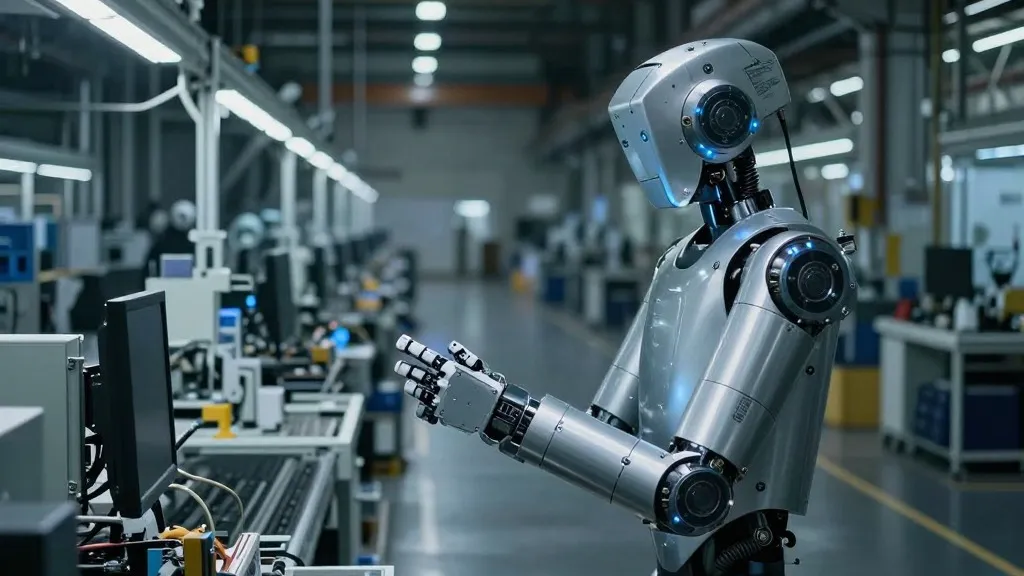
For businesses looking to automate dangerous or repetitive tasks, the arrival of Tesla’s humanoid robot, Optimus, is now expected to happen around the end of 2027. During the company’s third-quarter 2026 earnings call, CEO Elon Musk confirmed that external deliveries will begin in approximately a year and a half, a shift from earlier, more aggressive targets. This timeline reflects the reality that the robot is not yet ready for the rigors of industrial work outside of Tesla’s own facilities.
The primary hurdles keeping Optimus from immediate release are the design of its hands, its overall durability, and its artificial intelligence capabilities. Musk emphasized that the electromechanical design requires significant refinement. Specifically, the fingers must be soft enough to handle delicate items yet durable enough to withstand constant wear, a challenge complicated by the fact that robots cannot heal like human skin. Engineers identified the hands and custom gears as the most difficult hardware components to perfect.
On the software side, Tesla lacks the massive fleet of robots needed to collect the data that powers its autonomous driving features. To solve this, the company plans to build 10,000 to 20,000 units for an internal 'Optimus Academy' where they will practice tasks. The robot is also scheduled to receive the AI5 chip around April 2027. Musk promised a video within the next month or two showing the robot performing unscripted tasks, aiming to prove the system is not just running pre-programmed routines.
Production is currently ramping up at the Fremont facility, where Model S and Model X were previously built. While the line is designed for a theoretical capacity of one million robots per year, reaching that level will take at least a year because the design is still changing. Tesla’s shareholder letter recently described the current output as the first 'production-quality' bots, implying that earlier units were not yet ready for commercial sale.
The delay is part of a pattern of shifting timelines. In 2024, Musk suggested high-volume external production could happen in 2026, but that target has since moved to late 2027. This pushback puts Tesla on a similar schedule to its competitors. XPeng, a Chinese automaker, has automated its IRON robot production line and plans mass production by the end of 2026, with deliveries starting in the first half of 2027.
Meanwhile, Boston Dynamics, which is owned by Hyundai, has taken a different approach by prioritizing sturdy grippers over human-like dexterity. Its electric Atlas robot has been in production since January, with all 2026 deployments already committed to clients, including Google DeepMind. While Musk claimed no one is close to Tesla’s progress, these competitors are actively deploying robots in real-world settings, such as car assembly lines.
The core challenge for all these companies is generalization: teaching AI to handle new, unscripted tasks reliably. Until the hardware is durable and the software is adaptable, the robots remain in a testing phase. For now, the end of 2027 stands as the new benchmark for when Optimus might finally start working for other companies.
Source: Electrek